
Small Batch New Orleans Style Beignets
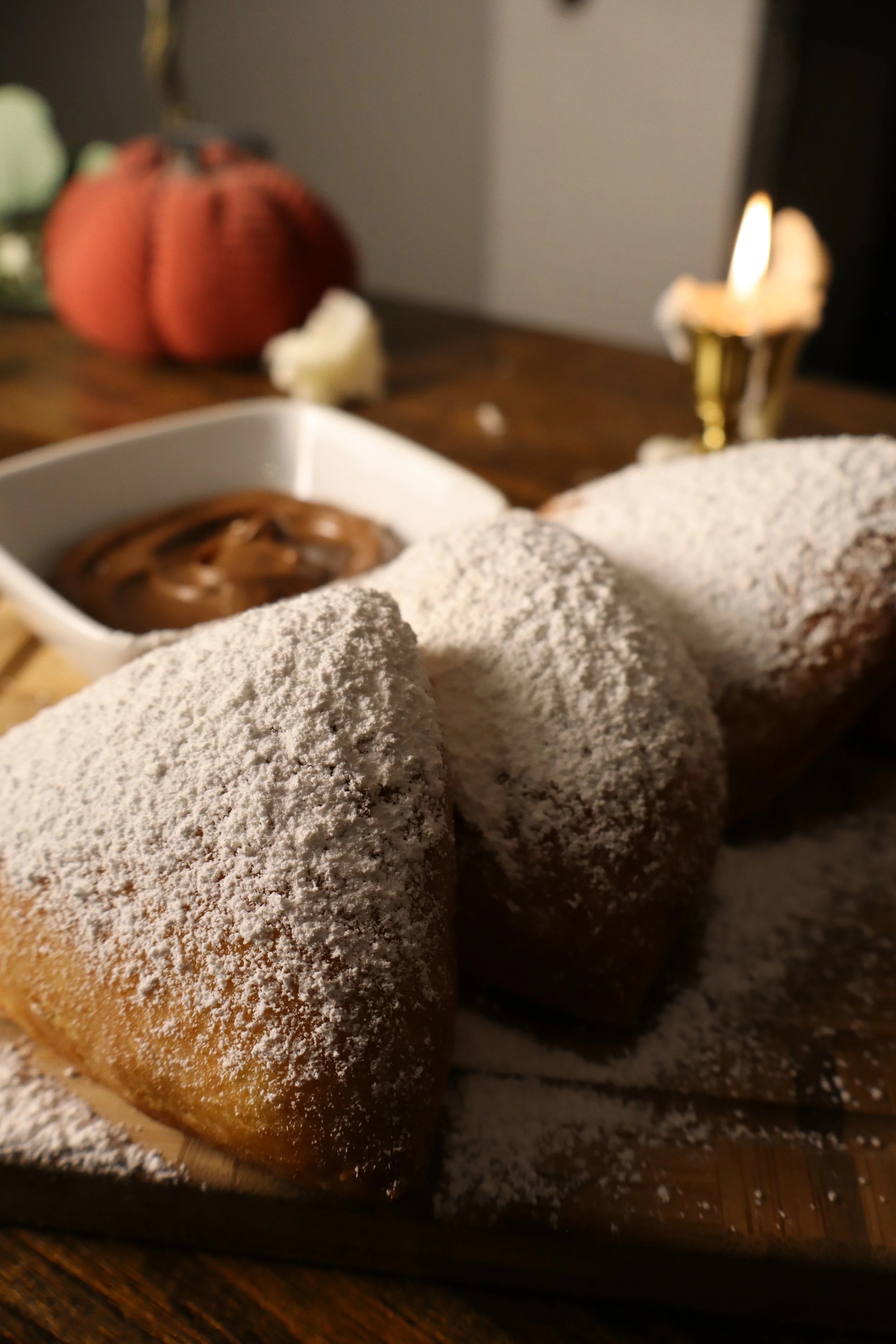
These small batch New Orleans style beignets are light & fluffy, with crisp golden edges and a generous mountain of powdered sugar. They’re fried fresh and served warm with a rich chocolate dipping sauce, making four perfectly indulgent beignets for when you want something special without making a giant batch.

Small Batch New Orleans Style Beignets
Four golden, pillowy beignets piled high with powdered sugar and served with warm chocolate dipping sauce.
Ingredients
- ¼ cup (60mL) whole milk, warmed to 110–115°F
- 1 teaspoon granulated sugar
- ½ teaspoon active dry yeast
- 1 egg yolk
- ½ teaspoon vanilla paste
- 1 cup (120g) all purpose flour
- ⅛ teaspoon salt
- 1 tablespoon (14g) unsalted butter, softened
- Neutral oil, for frying (canola)
- Powdered sugar, for dusting
- Nutella, for dipping
Instructions
- Activate the yeast by combining the warm milk, sugar, and 1/2 tsp yeast in a small bowl. Stir gently and let sit for 5–10 minutes, until the yeast is foamy.
- In a medium bowl, combine flour and salt. Add egg yolk, vanilla and yeast mixture to dry ingredients. Stir until combined into a rough, shaggy dough.
- Add softened butter to the mixture and knead until the dough becomes smooth. If the dough appears dry, add 1 tsp whole milk. The dough should be soft, but not overly sticky.
- Place the dough in a greased bowl and cover. Set in a warm area for 60-90 minutes while rising.
- Turn the dough out onto a floured surface and divide into 4 pieces, approximately 1/2 inch thick.
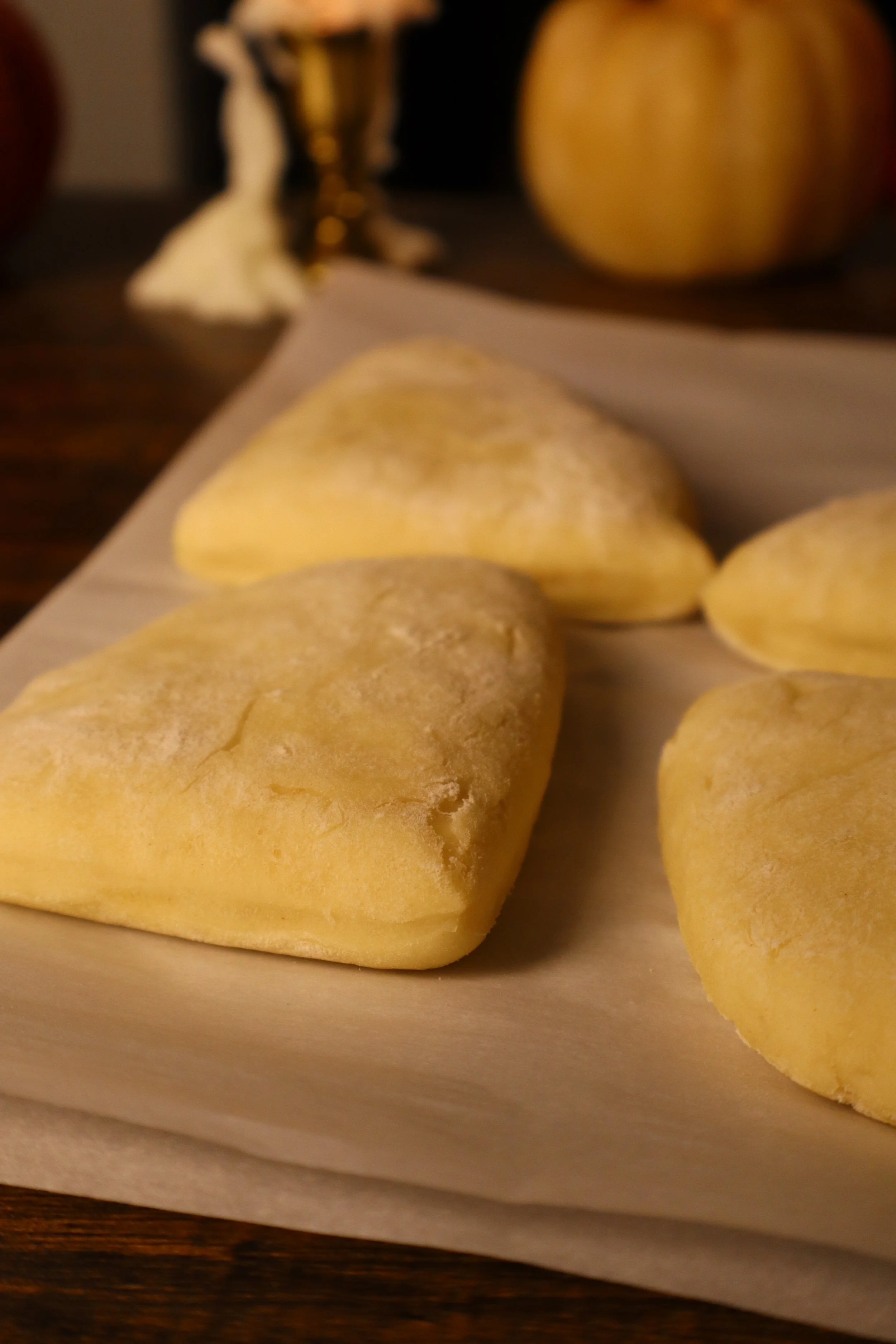
- Place dough on a sheet of parchment paper and allow to rise in a warm area for 1 to 1.5 hours. They should rise another 1/4 inch during this time.
- In a small saucepan, heat canola oil to about 340–350°F throughout frying process. Carefully lower the beignets one at a time into the hot oil, frying for 2 minutes each side.
- Allow to dry on a paper towel. Dust generously with powdered sugar and serve hot!
Notes
For extra pillowy beignets, let the dough rise a little longer. A slower, longer proof gives the dough more time to develop, resulting in beignets that are especially light and fluffy.

Nutrition Facts
Calories
201Fat
8 gSat. Fat
3 gCarbs
26 gFiber
1 gNet carbs
25 gSugar
2 gProtein
5 gSodium
82 mgCholesterol
58 mgNutritional information is an estimate and may vary depending on the specific brands and ingredients used.
Why Each Ingredient Matters
Whole Milk
Adds moisture and richness to create a soft dough. Warming the milk also activates yeast cells by rehydrating them and speeding up their metabolic processes!
Sugar
Provides a touch of sweetness and provides a fast, easy food source for the yeast to digest.
Yeast
The powerhouse of the dough! The yeast metabolize sugar molecules so they can make carbon dioxide bubbles that make the dough rise.
Egg yolk
Adds richness and tenderness. The fat in the yolk also helps keep the interior soft.
Vanilla
A small amount adds to the flavor of the dough. In this recipe I used vanilla paste, but vanilla extract works perfectly as well.
All purpose flour
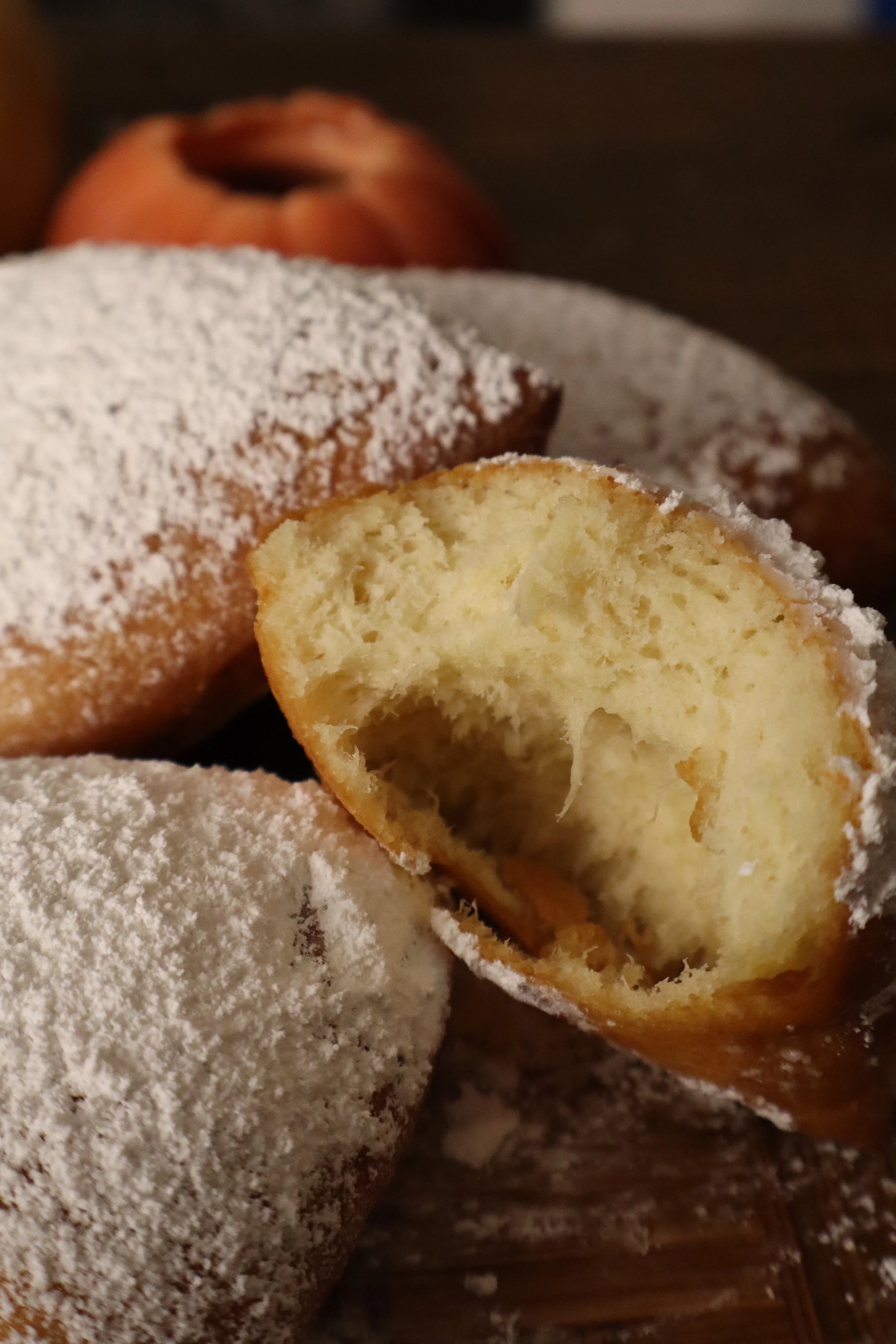
Provides the structure the dough needs while keeping the beignets tender and light. Its protein content gives the yeast dough enough gluten to trap air as it rises without making the finished beignets overly chewy.
Salt
Balances the sweetness and enhances the flavor of every other ingredient.
Butter
Adding the butter later allows the dough to develop structure before the fat is incorporated, helping create beignets that are light and fluffy.
Common Pitfalls - Don’t worry, I’ve made all of these mistakes so you don’t have to!
Milk that's too hot
Your milk should be warm, around 110–115°F. Milk that's too hot can damage the yeast and prevent the dough from rising properly.
Not giving the dough enough time to rise
The dough needs time to develop those little pockets of air that make beignets fluffy. If your kitchen is cool, the first rise may take longer than 1–1½ hours. The dough should look approximately doubled in size once it’s done rising.
Skipping the second rest
That short rest after shaping gives the dough another chance to relax and puff up. Don't skip this! My best beignets resulted from a second rise that was almost 2 hours long. It’s worth the wait.
Oil that's too hot
If the oil is too hot, the outside will brown before the center has a chance to cook through. Keep the oil around 340–350°F and adjust the heat as needed. I love having a good thermometer!
Made it? Tell me everything!
Loved these beignets? Leave a comment below and let me know how they turned out.
